
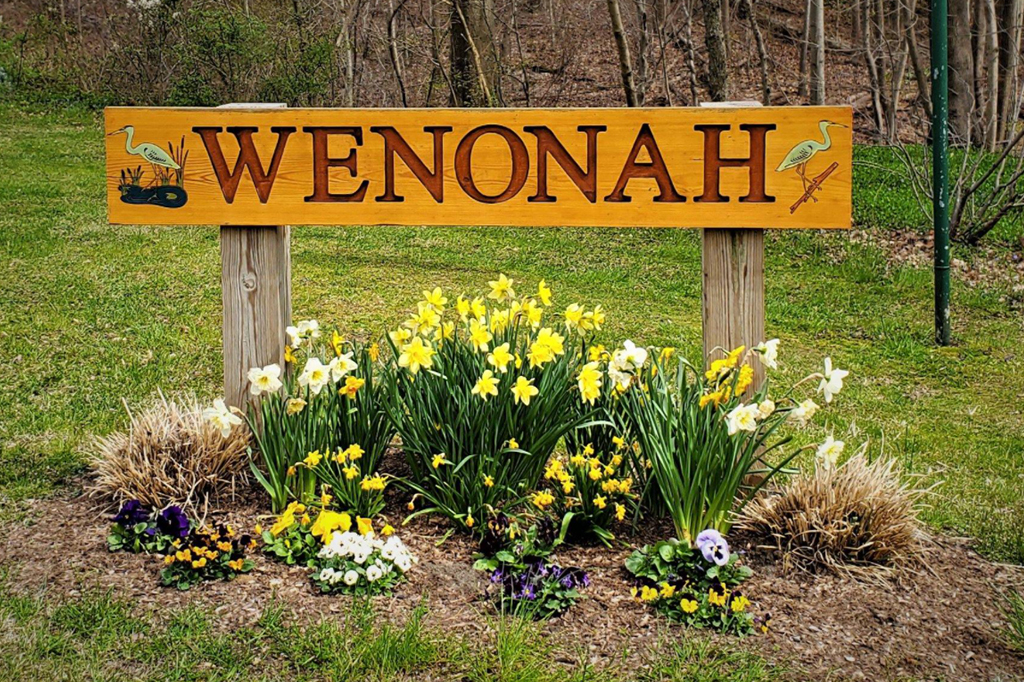
This Earth Month, Sustainable South Jersey partnered with the Wenonah Environmental Commission to host a hands-on volunteer day with a team from Veranova, a contract & development pharmaceutical manufacturing company based out of West Deptford, who came together to care for one of South Jersey’s treasured natural spaces.
Wenonah’s trails are a powerful example of what long-term stewardship can look like. The preservation of this land was made possible in part through the will of Frank H Stewart, who, after his passing in 1948, established a trust fund to purchase land adjacent to water for public parks and wildlife preservation areas. Over time, Wenonah utilized some of these funds to be able to acquire and preserve land throughout the borough. Today, the town is home to more than 120 acres of conservation land and over six miles of trails, all maintained through the ongoing efforts of the Wenonah Environmental Commission and dedicated volunteers. These preserved spaces provide critical habitat for wildlife while also offering the community a place to connect with nature.
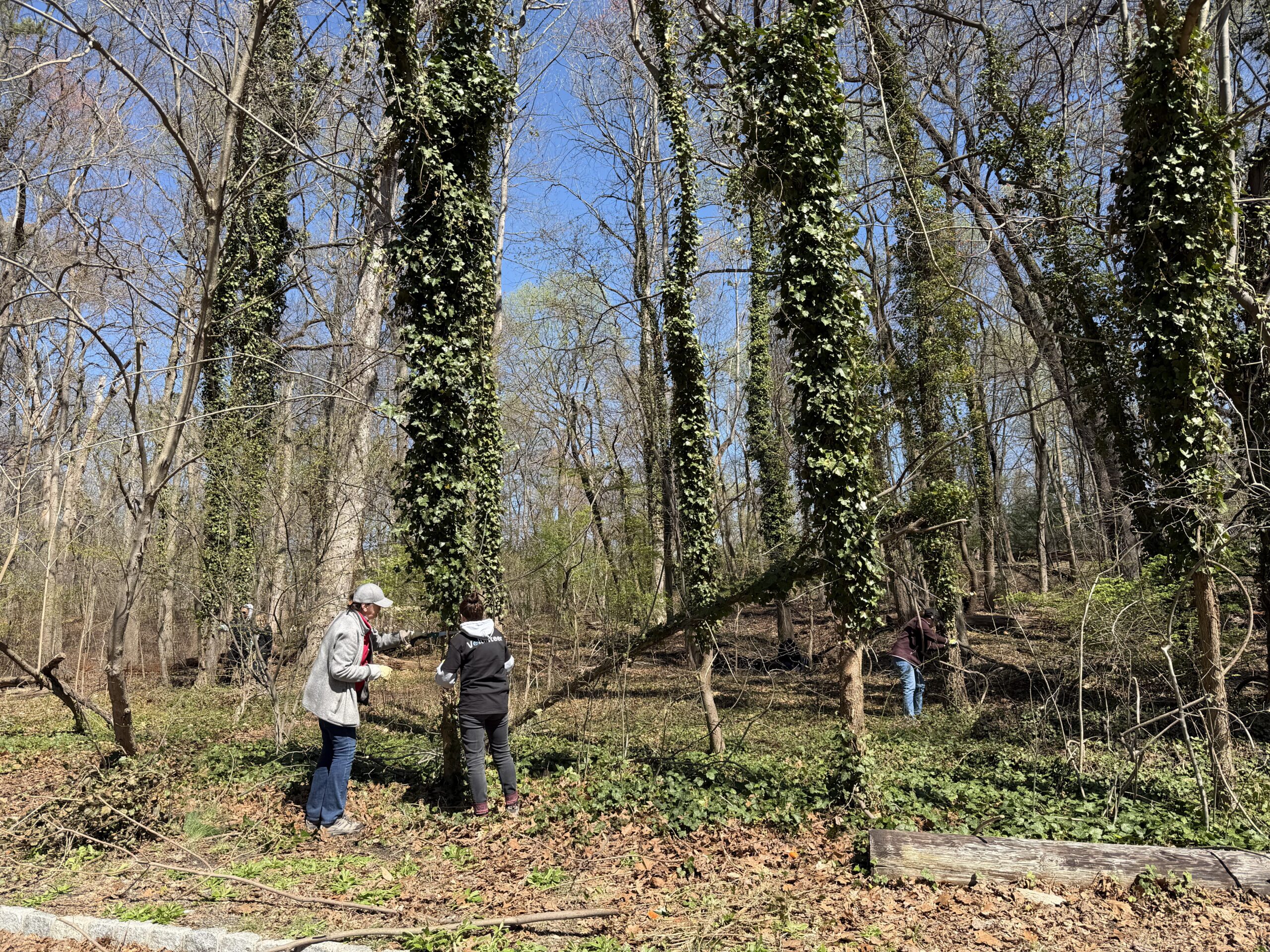
At our event, volunteers spent over an hour working along Wenonah Lake and the surrounding trails, taking part in two key efforts to support the health of the ecosystem.
One group focused on removing invasive species, carefully cutting English ivy from trees along the lake and trails. While ivy is still commonly used in landscaping, it can quietly cause serious harm by climbing tree trunks, blocking sunlight, and eventually weakening, or even killing, mature trees.
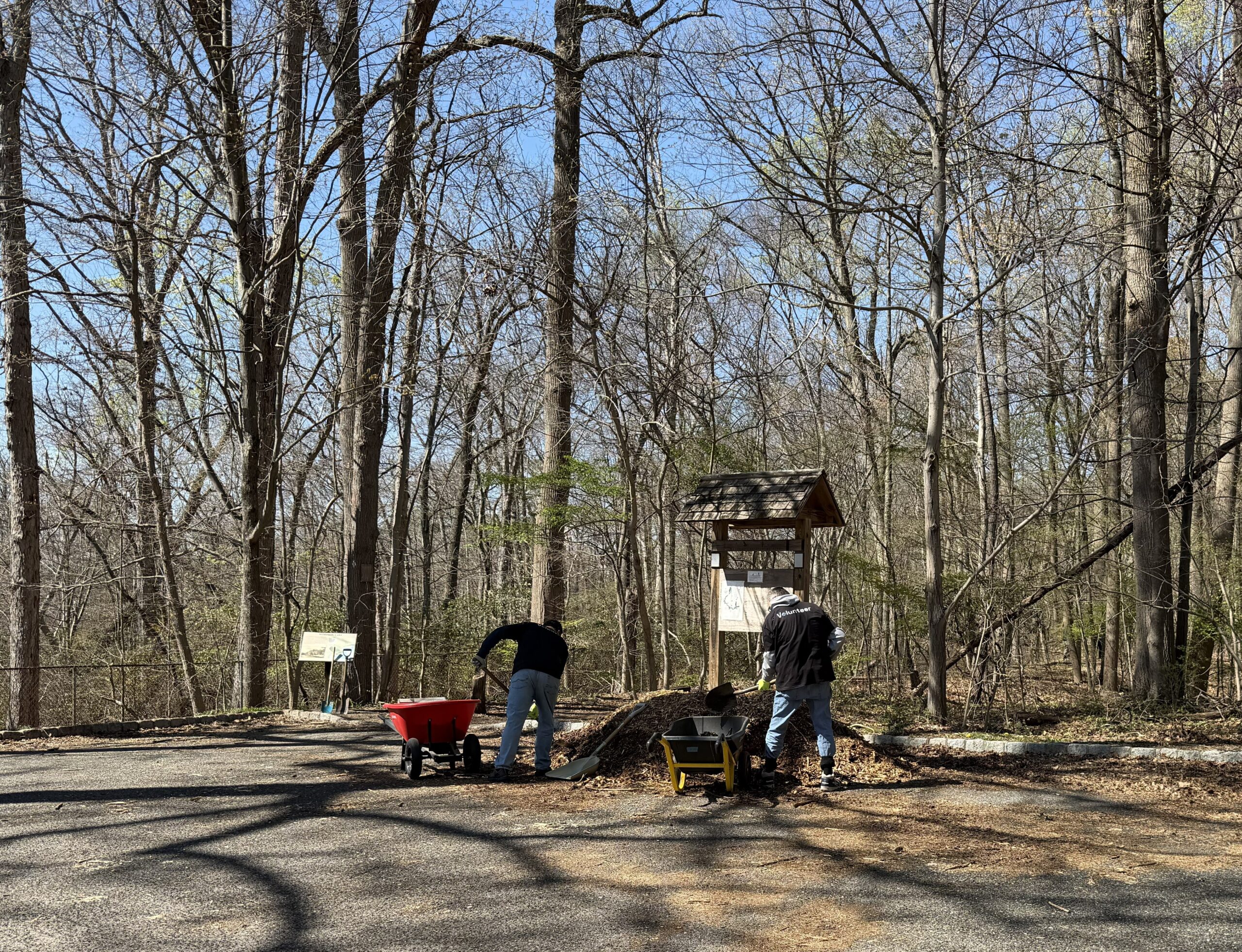
The second group worked to improve the trail system by spreading fresh woodchips. Woodchips help stabilize soil, reduce erosion, and improve drainage – keeping trails safer, more accessible, and more sustainable for long-term use. They also help guide foot traffic, protecting surrounding plant life from being unintentionally trampled.
After the work was done, volunteers had the opportunity to walk the Wenonah Lake Trail themselves, and experience firsthand the impact of their efforts and the beauty of these spaces they helped improve.
These activities highlight the importance of environmental stewardship, by not just preserving what’s already there, but also actively managing the balance of the ecosystem.
Many of the plants that cause the most harm don’t look harmful at all. Species like English ivy and bamboo are still widely planted in residential yards, yet both can spread aggressively beyond property lines, outcompeting native plants and disrupting local habitats. Choosing native or non-invasive alternatives is one of the simplest ways residents can support environmental health right at home.
Luckily, more organizations than ever now specialize in selling native plants in South Jersey, making it easier to incorporate environmentally beneficial plants into your own yard. April is a great time to explore your local garden center’s native plant section or keep an eye out for upcoming native plant sales in your area.
As we continue celebrating Earth Month, we’re reminded that environmental stewardship doesn’t have to be complicated. Sometimes, it looks like a few hours outside, a group of volunteers, and a shared commitment to care for the places we all enjoy. With more trail maintenance and expansion ideas already in motion, we’re excited to stay connected with the Wenonah Environmental Commission and look forward to future opportunities to work together again.
Heard this was a great event – ‘long-term stewardship’ is important for places like these.