
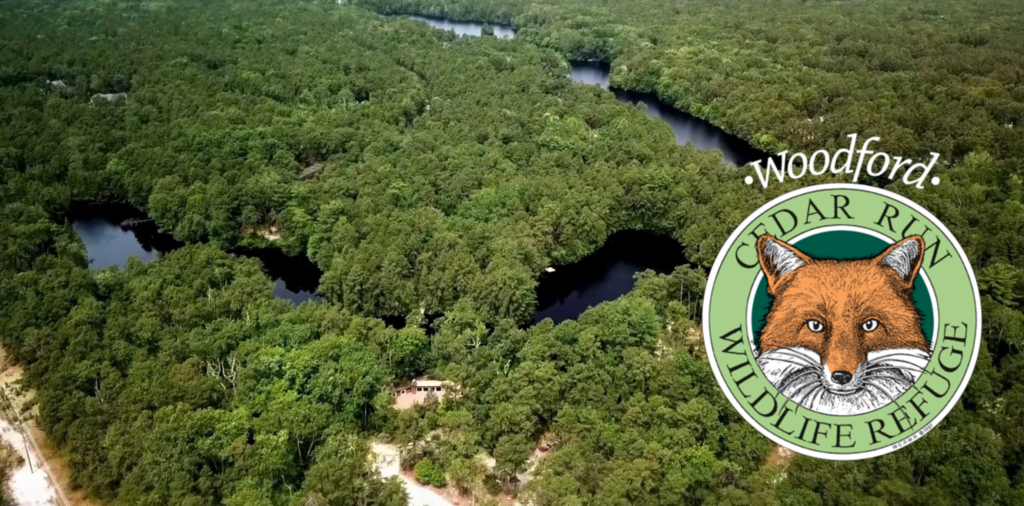
Join Sustainable South Jersey for a closer look at the animals, people, and conservation work at this Medford refuge.
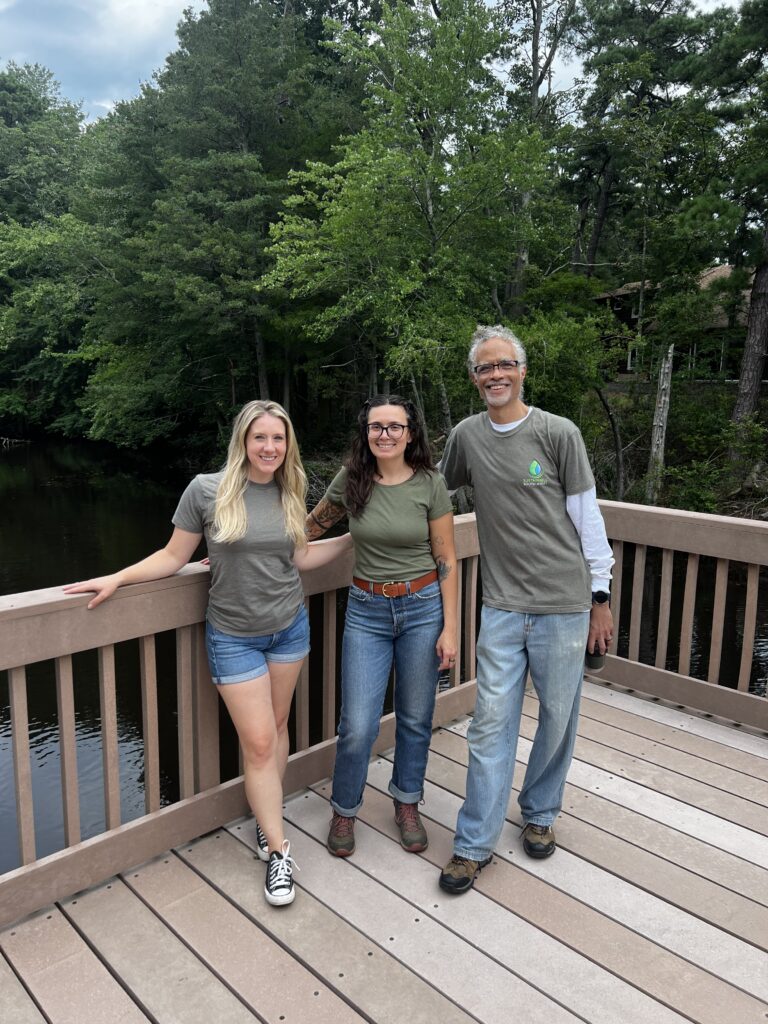
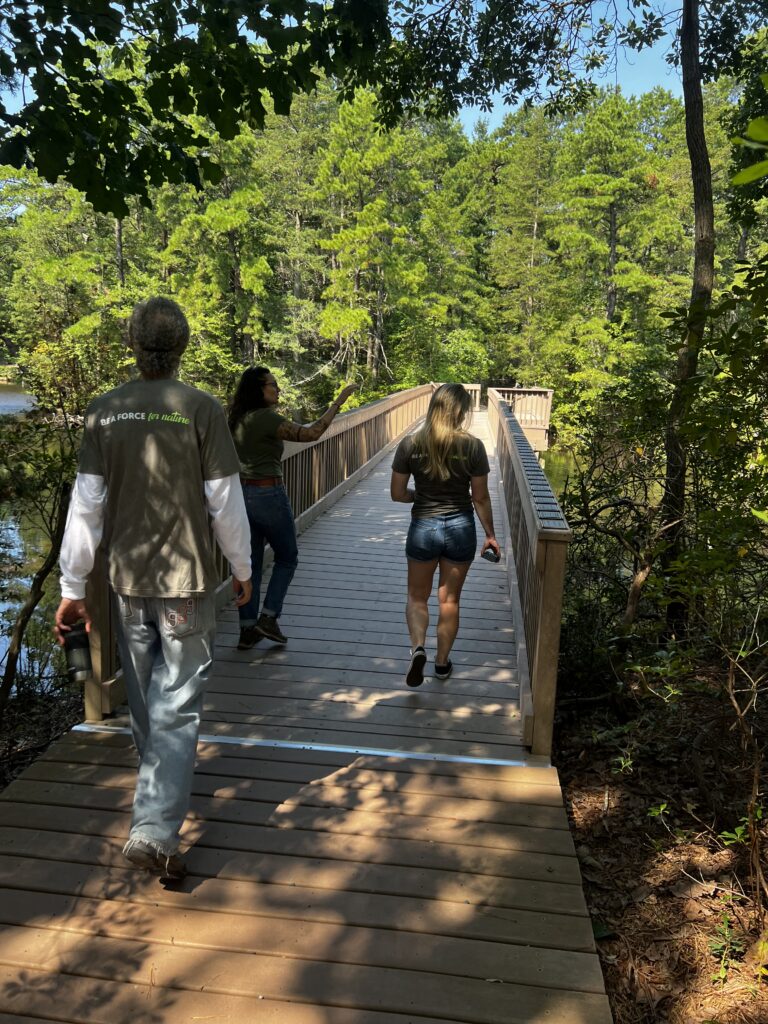
If you’ve ever found an injured bird in your yard or wondered what to do about an orphaned baby animal that seems to need help, you may already know about Woodford Cedar Run Wildlife Refuge in Medford. Members of Sustainable South Jersey’s (SSJ) Board got to see its work firsthand last month during a private tour with Director of Development Lisa Franco.
For SSJ, the visit was a natural fit. SSJ’s mission is to inspire personal connections to South Jersey’s ecological resources, promote environmental education, and serve as a nexus for community engagement, and it’s hard to find a more direct, on-the-ground example of all three than a place like Cedar Run.
From Family Retreat to Regional Refuge
Cedar Run’s story starts in 1957, when Jim and Betty Woodford bought 185 acres of Pinelands property for $5,600 — a price that gets a laugh every time Franco mentions it on tours. Jim taught science at Lenape High School; Betty ran night classes there and had a deep love of native plants, though she wasn’t a formally trained botanist. The rehabilitation side of the organization traces back to one moment: someone brought Betty an orphaned great horned owl, and she cared for it out of her garage. Word spread, and Betty became known as the person who helped injured animals.
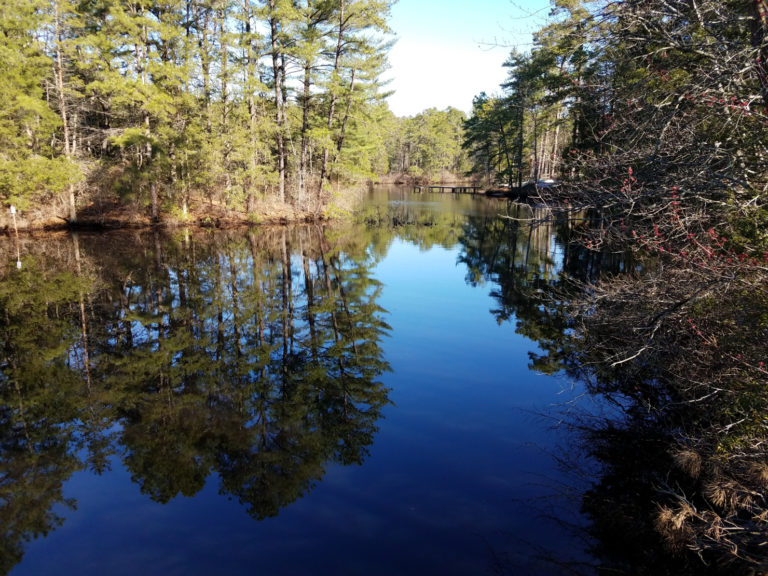
Their daughter, Jeanne, still lives on the property and remains active with the organization; she wrote the grant that preserved it. Today, 171 of the original 185 acres are permanently protected. The refuge has also recently earned arboretum status, the result of a multi-year survey confirming the property is 98% native trees, with only two non-native species found on the grounds. It’s a distinction Franco is proud of, and a reminder of just how rare intact Pinelands habitat has become.
Three Missions, One Property
Franco describes Cedar Run as one of the only organizations in southern New Jersey built around three connected purposes: environmental education, preservation of the Pinelands, and wildlife rehabilitation. Each depends on the others. The hospital responds when an animal is in trouble; the nature center helps visitors understand why that animal matters; and the protected Pinelands landscape gives that education somewhere real to point to.
It’s also a free public resource. Cedar Run fields more than 30,000 phone calls a year, roughly 80% of them wildlife-related, often with people trying to figure out whether a baby animal actually needs help, or how to safely get an injured one to the hospital. “We want you to call us,” Franco said. Staff welcome questions from people who are unsure whether an animal needs help.
A Record Year, and What’s Driving It
In 2025, Cedar Run’s wildlife hospital treated a record 7,963 native animals, with over 5,200 of them being babies, juveniles, or fledglings. It’s the third consecutive year admissions have climbed more than 20%.
Some of that is a genuine good-news story: more people know where to bring an injured animal now than a decade ago, especially since the pandemic put more people home and paying attention to their backyards. But Franco is careful not to frame rising numbers as purely a win. Most of what lands in the hospital traces back to human activity in some form. Some examples are animals hit by cars (possibly attracted to the roadside by a banana peel or apple core discarded from a vehicle), babies picked up unnecessarily by well-meaning finders, wildlife fed the wrong food, or small animals caught by outdoor cats and dogs. Shifting weather patterns are adding a new wrinkle, too: staff have seen babies arrive earlier in the year and later into fall, and a harsh February this year brought an unusual mid-winter surge of waterfowl, some clearly born out of season.
The math behind it all is sobering. The average donation that accompanies an animal into the hospital is about $14. The average cost of care is closer to $87. And for species requiring extended medication or specialized diets, it climbs from there. Two permanent raccoon residents alone cost the organization roughly $1,100 a month, even without any medication.
Cedar Run receives no regular local, state, or federal operating funding. Every dollar comes from admissions, memberships, grants, sponsorships, donations, and events. Grants covered about 14% of the budget last year, up from 6% a few years prior, a jump Franco is proud of but doesn’t want to lean on too heavily given how unpredictable that funding has become.
Meet Some Wildlife Ambassadors
The goal is to rehabilitate animals and release them whenever possible. That takes more than treating an injury. An animal also needs to be able to find food, move safely through its environment, and live independently of people.
Staff and volunteers keep unnecessary handling and interaction to a minimum for animals intended for release. Recovering birds of prey move through flight enclosures where rehabilitators can assess their progress, including their ability to fly and hunt.
One success story involved a young kestrel that was rehabilitated, banded, and released. A year later, wildlife officials report finding her nesting with chicks of her own. For Cedar Run’s team, it was a welcome update on a bird they had helped return to the wild, and a chance to see that work benefit another generation.
Some animals, however, cannot safely be released. Permanent injuries or dependence on people may prevent them from surviving on their own and those animals may become residents at Cedar Run. Meeting the residents is a memorable part of a visit. You can see animals that are usually difficult to observe up close and learn why each one needs continued care. A few standouts from the tour:
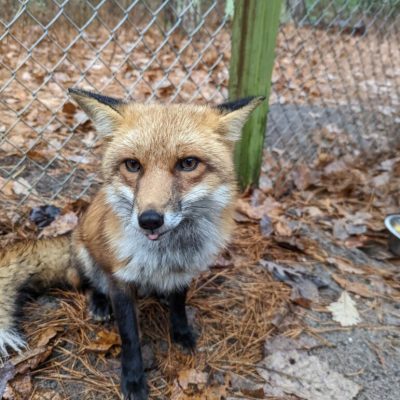
Ember, a red fox, arrived as an orphaned kit after her mother was likely struck by a car. A fractured leg required surgery, but complications as she grew left her with lasting weakness. She can’t run the distances needed to hunt successfully, so she could not be released.
Henry, a Northern Cardinal with albinism, was hand-raised at Cedar Run after arriving as a fledgling. His condition left him with fragile feathers and poor depth perception, enough that he struggled to land on nearby perches, so he was kept on as an education ambassador rather than released.
Aldora, a red-tailed hawk, was hit by a car on Christmas Day in 2001 and lost most of the vision in one eye. He was the first bird at Cedar Run trained to work “on the glove” for education programs, and his name fittingly means “winged gift” in Greek.
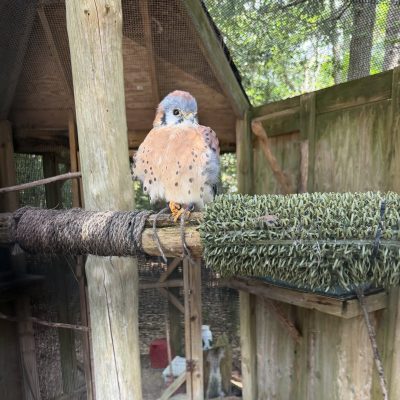
Comet, an American kestrel, is North America’s smallest falcon and, despite an old wing fracture that keeps him grounded, one of the more enthusiastic residents about mealtime. Kestrels’ diets lean heavily on insects rather than the small mammals people assume raptors eat.
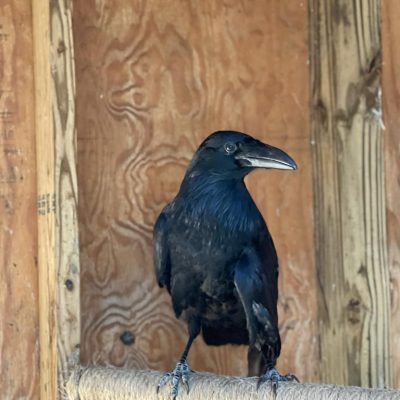
Poe, a common raven, arrived after a wing injury healed improperly at another facility before he could be transferred. He’s since picked up the habit of talking, often greeting visitors with a startlingly clear “how are you doing?” in the voice of one of the rehabilitators he spent time around.
Fabio, a black vulture, imprinted on the people who found him as a chick in Georgia before he reached a wildlife facility. Now in training as an education ambassador, he’s helping Cedar Run make the case that vultures are, in Franco’s words, “the cleanup crew of the world.” Their stomach acid can neutralize bacteria that would sicken almost anything else, and the reason vultures perch with wings spread in the sun is for hygiene, because they’re using UV light to help sterilize their feathers.
Residents also have different comfort levels around people. Some travel with educators to schools, senior centers, and community programs. Others stay on-site or away from public display. Staff adjust each animal’s role to its needs, with lifelong care remaining the priority.
Why So Many Healthy Animals Can’t Go Home
A recurring theme of the tour was how close contact with people can affect an animal’s ability to return to the wild. Young birds can imprint on humans, while wildlife can also become habituated, or accustomed to people. These changes can make release unsafe, particularly when an animal continues to seek human attention or food. Rehabilitators assess each animal’s behavior and ability to live independently before deciding where it can be released.
That’s the story behind a surprising number of Cedar Run’s residents: Acorn and Nutmeg, two wood ducks raised by well-meaning humans (one in a classroom, one by a finder in New York City); Myrtle and Finneas, wild turkeys kept illegally as pets before being surrendered; Gus and Charlie, two raccoons raised in a garage and a shed with improper diets before Fish & Wildlife stepped in. Cedar Run’s rehabilitators always give an animal an opportunity to regain wild behaviors first, but once habituation sets in, it rarely reverses.
Franco is candid that social media has made all of this harder to combat. Videos of “friendly” foxes, raccoons, and crows rarely show the challenges of caring for wildlife or the effects on an animal’s future. Cedar Run’s approach is to meet that head-on with its own education push: teaching kids not to name a baby bunny they find, explaining what “fawn-napping” is and why a fawn left alone in the grass usually isn’t actually abandoned, and reminding people that coexisting with wildlife mostly means observing from a respectful distance rather than intervening.
Building for the Next Decade
Cedar Run recently hired its first full-time veterinarian, Dr. Amanda Cameron, who came from a wildlife hospital in Massachusetts and specializes exclusively in wild species — a rarity in veterinary medicine. Before her arrival, Cedar Run had assembled a medical suite with donated equipment, including an X-ray unit. Her expertise has helped the team make fuller use of that equipment and perform more procedures on-site. A new partnership with Rowan University’s veterinary school (one of only nine programs in the country with a dedicated wildlife track) gives students hands-on rotations at Cedar Run, something Franco hopes helps grow a field that’s chronically short on specialists.
Other projects in motion: a donor-funded waterfowl enclosure with a waterfall feeding into the lake; a fully donated education van to replace one whose air conditioning failed this summer (dangerous for animals that travel in carriers to school visits); and a long-term plan to improve accessibility, specifically for wheelchair users. A rebuild of the eroding outdoor amphitheater used for school programs and even the occasional small wedding is estimated at roughly $107,000 and will likely happen in phases.
How to Help
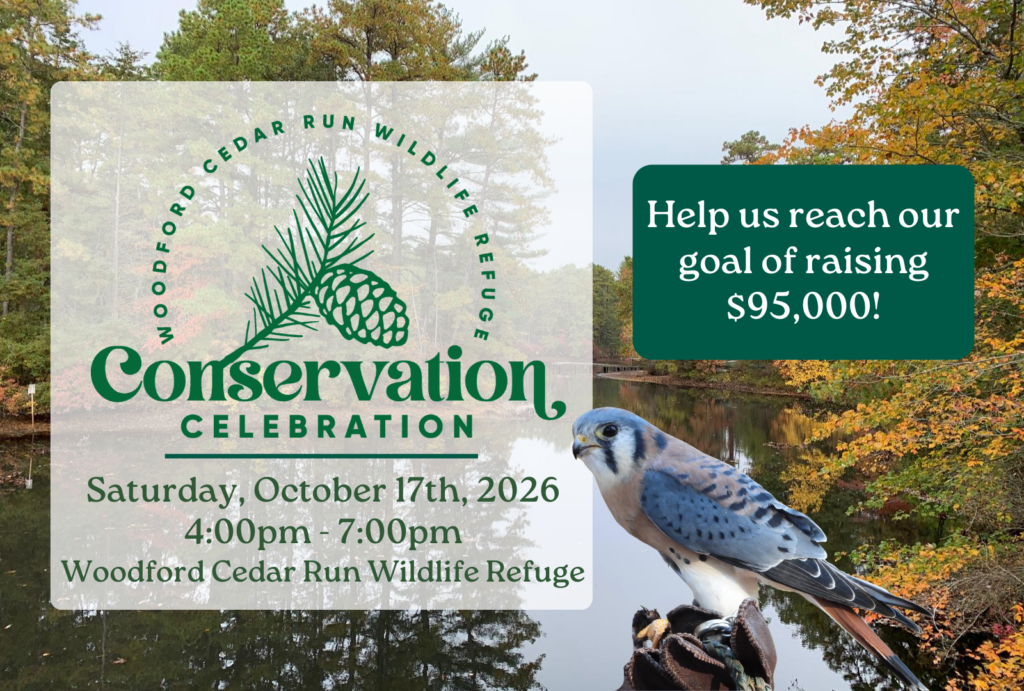
Cedar Run’s biggest fundraiser of the year, Conservation Celebration: Honoring Wildlife Heroes, returns to the refuge grounds on Saturday, October 17, 2026, from 4:00 to 7:00 p.m. Last year’s inaugural event blew past its $60,000 goal, raising $85,000 for a seated dinner of 150 guests; this year’s goal is $95,000, with proceeds going toward baby season preparation for 2027. The evening includes a fully vegan Mediterranean dinner from Norma’s in Cherry Hill, staff-led storytelling instead of a hired emcee, and a behind-the-scenes wildlife hospital tour for guests.
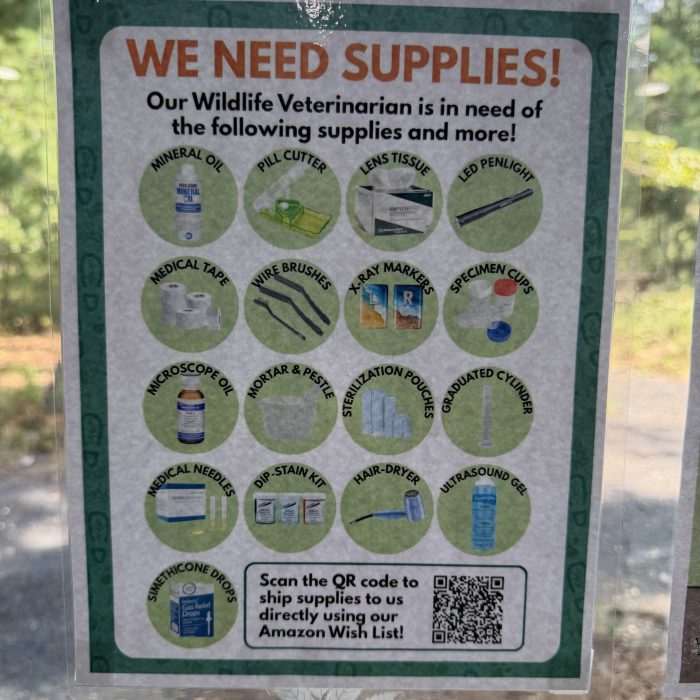
Franco points to visiting as one of the simplest ways to help: admission and membership fees support Cedar Run’s work, including wildlife rehabilitation and ongoing care for resident animals. Beyond visiting, you can become a member, make a donation, symbolically adopt a Wildlife Ambassador, or explore volunteer opportunities. Cedar Run’s wish list is another practical way to help, with everyday supplies needed to care for animals throughout the year. Its website offers additional options for ongoing giving and business sponsorships.
And just as important, in Franco’s view, is knowing when not to intervene — calling Cedar Run before picking up or moving a baby animal you find, rather than after. As she put it near the end of the tour: “Every single animal on this planet, whether it’s a tiny worm or a great horned owl, has a purpose. We want to make sure that purpose isn’t gone before it’s supposed to be.”
The SSJ Connection
Sustainable South Jersey works to connect people with the region’s natural places, promote environmental education, and encourage community involvement. Cedar Run puts those goals into practice by protecting Pinelands habitat, caring for native wildlife, and helping people understand the animals around them.
A Cedar Run visit is a chance to enjoy the refuge and learn how everyday choices can help wildlife. It’s hard to walk the trails, meet Ember or Poe, or learn how a box turtle’s one-mile world can be upended by a single new road, and not come away with a sharper sense of what “South Jersey’s ecological resources” actually means. For SSJ’s community, it’s a local way to support conservation and a healthier environment for people and wildlife.
Based on Sustainable South Jersey’s tour and interview with Lisa Franco, Director of Development, and Cedar Run’s published resident profiles and visitor information.
Plan Your Visit or Get Help
Nature Center: 4 Sawmill Road, Medford, NJ 08055
Wildlife Hospital: 6 Sawmill Road, Medford, NJ 08055
Phone: 856-983-3329, ext. 107
Call for guidance and follow Cedar Run’s current intake and transport instructions.